top of page
Welcome to the GETHOOKED Fishing Fiends Blog..

If you are a member then post some stories. If you are not a member then join today and show us what you got! #gethooked #louslures

Search
  • Feb 23, 2020
  • 1 min read

Updated: Feb 25, 2020

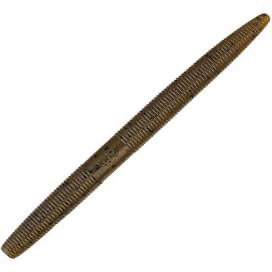
I typically use some sort of plastic lure almost every time I fish. Whether it be on as a trailer, drop shot, wacky rig, ned rig, Texas rig, Carolina rig, or more; you should always make sure to have the correct color. Typically, if the water is stained or muddy, you’re going to want to represent a silhouette in the water. This can be done by using a dark black/blue, dark purple, black, etc. Now, if the water is clear, you‘re going to want to use a more natural color. For example, watermelon, pumpkin, brown, etc. Although for clear water you’re going to want to use natural colors, sometimes you can get a reaction bite if it is sunny out by using colors like pink, purple, red, or neon. Also, for night time. People may think to use bright colors so they stand out, but that isn’t correct. The best colors to use are very dark, like black. That’s how you pick plastic colors, hope this helped you. Tight Lines!



  • Feb 22, 2020
  • 1 min read

Updated: Feb 25, 2020

There’s not much we can do about it. The fishing off-season means the bite has slowed to a screeching stop And for many northerns, the only option you have right now is to sit over a hole in the ice. But there are several other ways to better yourself as an angler while off the water so that you’re more successful on the water next season.


Here are 3 way that you can improve. 1.) There are a lot of tutorial videos on YouTube watching YouTube videos are a very good way to improve. 2.) If you are a tournament angler and you know the lakes you will be fishing this upcoming season you can study those body’s of water. 3.) There are countless apps that you can download that could help you, fish brains bass forecast ect. For the tournament angler, there are so many opportunities out there now to pre-practice. You can get quite A bit of detail of an entire lake in just a few hours at multiple water depths using Google Earth or your graph. You can research old tournament reports for the lake you’ll be fishing to get an idea of what the weights will look like and what the predominant patterns will likely be.


  • Feb 22, 2020
  • 2 min read

Updated: Feb 25, 2020

The 3 most common types of fishing lines are monofilament, fluorocarbon, and braid. There are a few different ones like “co-polymer” for example, but we aren’t talking about those. First, you want to establish what pound test you are going to need, I usually use 8-12 lb flouro if I’m going to run it as my mainline for bass; however, if it is being used as a leader,I use typically 12-15. I use the same pound test for Monofilament. Now, onto braid. I love using braid. It may sound crazy that I use this strong of line, but it helps with cutting through vegetation, minimizing line stretch, and staying strong after many uses and abrasions. I

typically use 30 lb. braid for dragging big worms through vegetation, all the way up to 55-60 for frogs and flipping. Finally, what’s the difference between all of these lines? Well, braid is a multi-stranded string woven together to create a strong hold. This type has almost 0 stretch, no line memory, thinner than mono or flouro in the same lb. test and strong strength after abrasions. Braid is also hydrophobic; meaning that it won’t absorb water. Which results in the tendency to float. Also, it does not become translucent in the water like flouro or mono. Secondly, flourocarbon. Flouro is a really good line for finesse plastic worms and drop shots. Altbough, this line will sink faster and also has a little less stretch than monofilament, it is a great line for bottom style finesse tactics. Also, it is all around more abrasion resistant than monofilament. And lastly, monofilament line. Mono is a more neutral floating line, great for top water like poppers/whoppa ploppas/spooks. It is a little less abrasion resistant, much more affordable, and has the most line stretch. That’s it, I hope you all learned something. Tight lines!


A Brand by a Fisherman, For a Fisherman!

bottom of page